Career Profile - Evelyn Keefe
Everybody Needs to Breathe Air: One Student's Path Into Atmospheric Science
Real-World Magic and the Turning Point
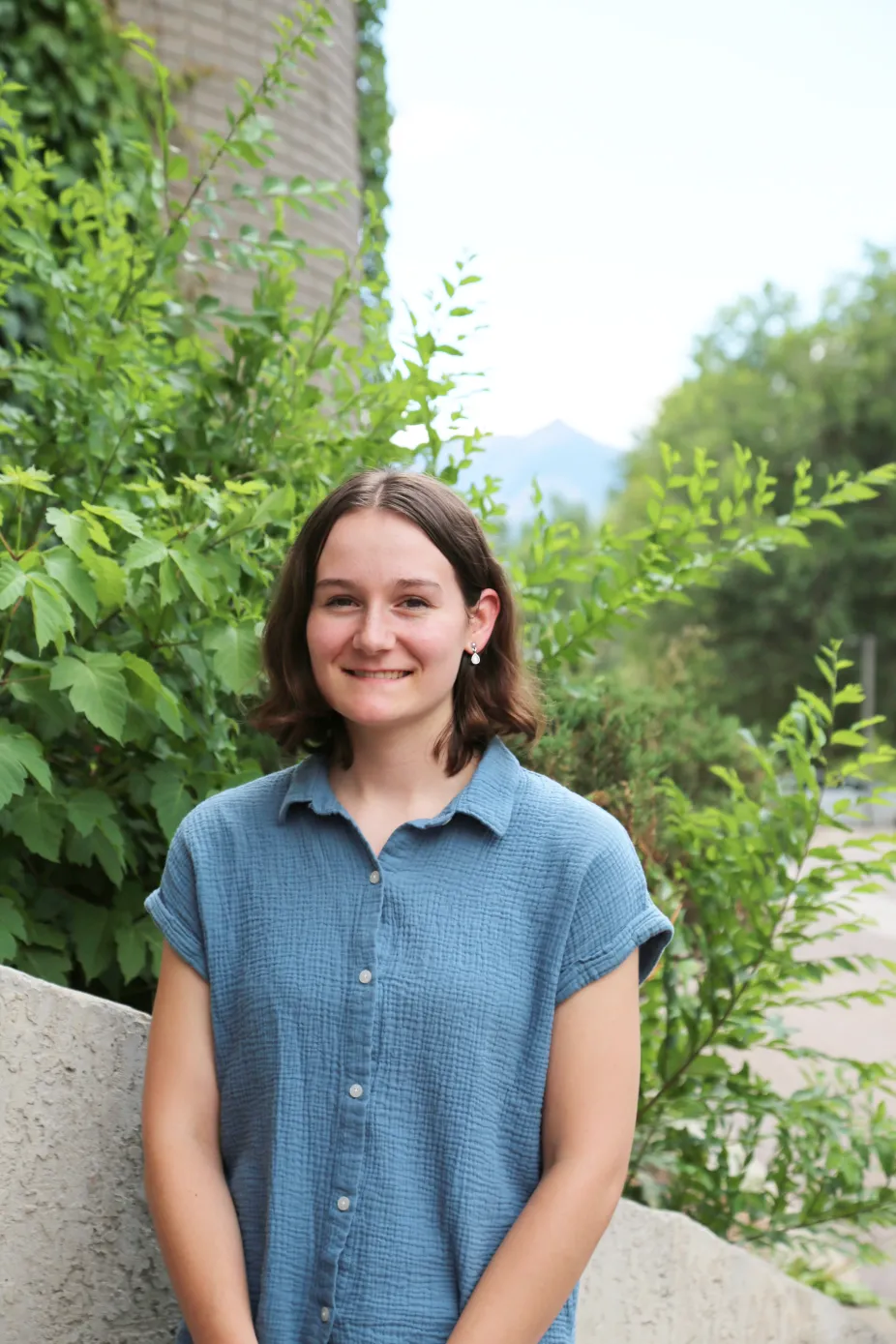
Evelyn Keefe standing outside the UCAR Center Green Campus
Evelyn Keefe did not grow up with a single defining moment that pointed her toward science. Instead, she had a running curiosity, sneaking into the living room to watch documentary films and losing herself in fantasy novels full of magic systems. "I think science is real-world magic," she says. "Especially with weather, the idea of predicting the future using equations and models felt like exactly the kind of real magic I wanted to practice."
That curiosity grew into a specific career path in 2023, when an intense Canadian wildfire season sent thick smoke rolling into New York, a state not typically known for fire weather. Experiencing severe, poor air quality firsthand convinced her that atmospheric pollution was an urgent issue. She was already interested in science, but that event served as her clear turning point toward atmospheric science.
Practicality shaped Evelyn's early college search, leading her to apply mostly to affordable in-state New York schools alongside Cornell University for its research opportunities. Waitlisted initially, she mentally prepared to attend SUNY Oswego for its broadcast meteorology program before her acceptance to Cornell came through. Encouraged by her parents to pursue her passion for research over broadcast work, she took the leap. She got there and really liked it, realizing that it was a lucky occurrence that ended up fitting the exact ticket she wanted.
A Summer That Didn't Go as Planned
Not everything in Evelyn's academic career went according to plan. The summer between her freshman and sophomore years, she secured an AmeriCorps service internship. However, federal funding fell through due to an administration change, leaving her without a placement after other application deadlines had passed. Watching the offer get rescinded hit hard; she felt angry for herself and disappointed for the community members losing those services.
Rather than dwelling on it, Evelyn returned home, leveraging her food service experience to work at a vegan restaurant, and spending valuable time traveling to see her partner. That summer taught her that she was both resilient and adaptable. The following summer, her perseverance paid off when she earned a spot in the NSF SOARS program in Colorado.
Why Air Quality Matters to Everyone
Evelyn’s research centers on air quality, a critical field as climate change increases wildfire frequency and spread. Wildfire smoke releases harmful aerosols and chemicals, such as ozone, fine particulate matter (PM2.5), formaldehyde, and carbon monoxide. These pollutants interact with human respiratory systems, sometimes acting as carcinogens that cause acute illness or reduce life expectancy.
Noticing major outlets like The New York Times starting to highlight air quality made her realize the problem was expanding faster than science is able to address it. "Everybody needs to breathe air," Evelyn says. "You don't get a choice about that. So understanding what's actually in the air you breathe is one of the only ways you can protect yourself."
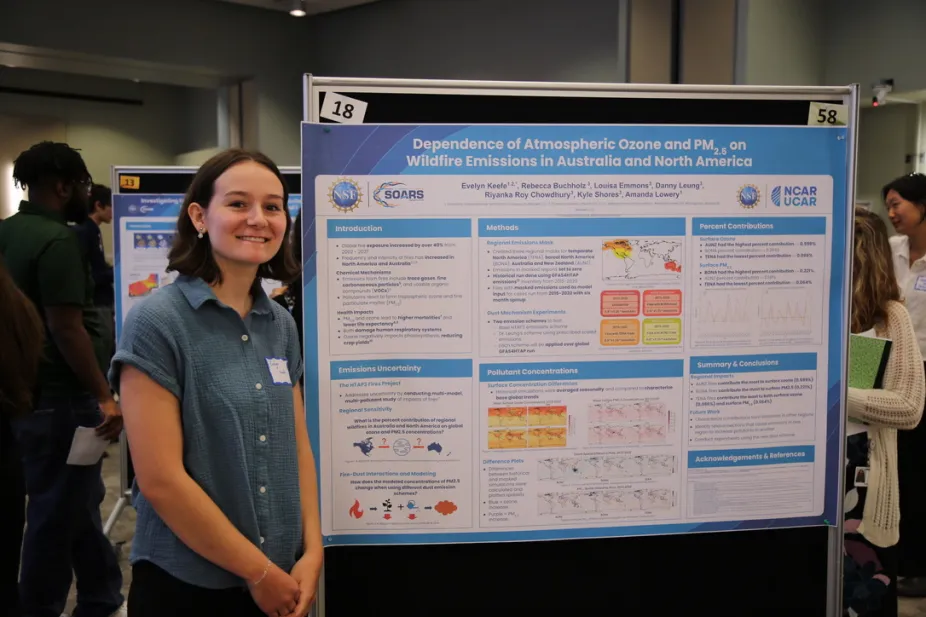
Evelyn Keefe standing in front of her NSF SOARS poster at the annual NSF NCAR, UCAR, UCP Summer Student Conference.
The Kid Who Read the Whole Encyclopedia
Long before studying atmospheric chemistry, Evelyn demonstrated a deep love for academic research. As a child, she received an animal encyclopedia and read it cover to cover, taking Post-it notes on taxonomic hierarchies before ever learning them in school. Looking back, she realizes she was really into the act of studying itself, which she describes as the heart of academia and research in a nutshell: "learning everything you can about something and contributing it back to the field."
Advice for the Next Student
For students exploring scientific pathways, Evelyn offers clear advice. She urges students to apply broadly - even to programs they feel doubtful about - because staying engaged helps you discover opportunities early enough to share them with peers even if they aren't the right fit for you. Because atmospheric science is a small field, she emphasizes building strong relationships with professors, peers, and alumni for invaluable mentorship.
Finally, she reminds students that support does not have to come strictly from academic departments, noting that some of her strongest encouragement came from fellow student employees at her campus dining job. "It's less about the field and more just about interpersonal support," she says. "Hearing what other students are going through with exams and projects makes you feel less alone."
Looking Ahead
Evelyn encourages prospective students who feel uncertain to take the plunge, emphasizing that members of their community are already part of this field. "Even if you don't see people who look like you on TV broadcasting the weather, know that members of your community are already part of this field. You are not alone in it. Just be curious."
With another year before graduating with her Bachelor of Science, she is taking the time to thoughtfully explore potential graduate programs before applying, eager to continue her work at the intersection of atmospheric science and public health.