Earth System Interactions: Changing Snow
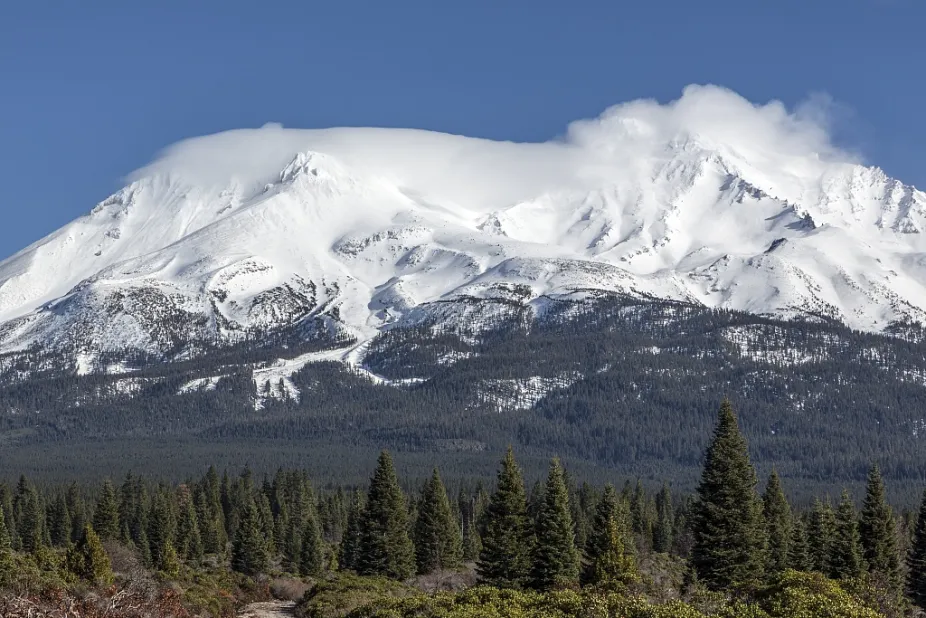
Snow is an important part of the cryosphere, which includes all of the frozen water on Earth’s surface.
NOAA Climate Program Office
Earth’s atmosphere is warming. And rising temperatures don’t just affect the air around us — other parts of the Earth system are changing as well. Frozen water in the form of ice or snow on Earth’s surface composes the part of Earth’s system referred to as the cryosphere. Rising temperatures can directly affect the cryosphere in multiple ways, one of which is by changing the amount of snow that accumulates each winter. Changes in wintertime snow accumulation affect both the timing and the amount of snowmelt that enters streams and rivers during warmer seasons. These effects, from the atmosphere to the cryosphere to the hydrosphere (containing all of Earth’s water), paint a clear picture of the continuous interactions across Earth’s systems.
What is the role of snow in the Earth System?
In many areas of the globe, winter and spring snow play an important role in determining water availability during the summer and early fall.
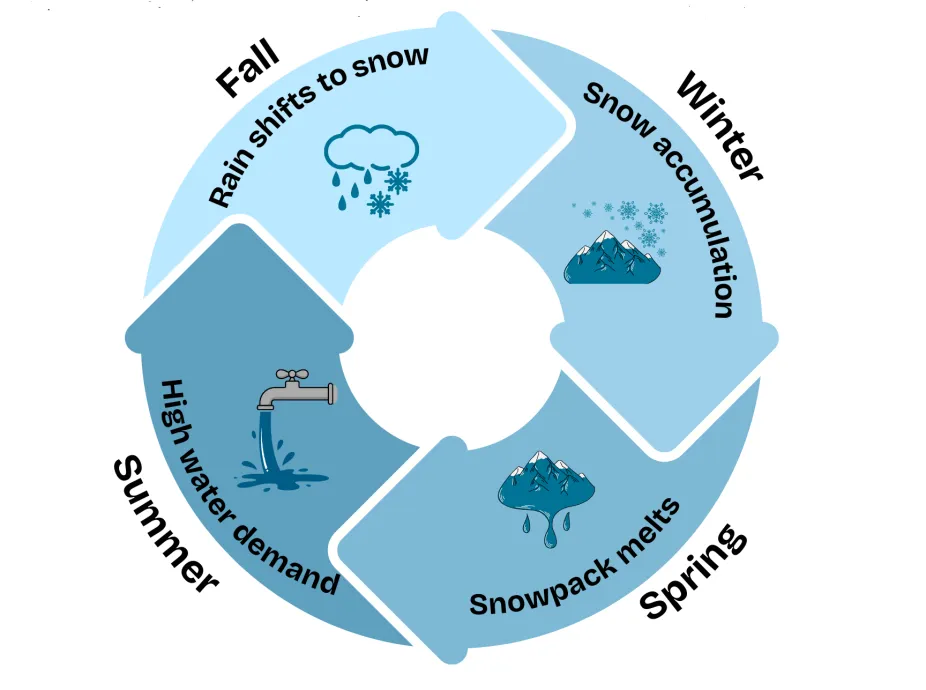
Snow accumulation and melting are an important part of the “water year,” which begins each fall on October 1. Late fall and winter snow accumulations help support sufficient water levels in streams and rivers during the spring and into summer, ahead of high water demands during summer’s peak heat.
UCAR/The COMET Program
Hydrologists and water resource managers in the western U.S. talk about water storage and availability in terms of a water year. A new water year begins every October 1 and runs through the following September, tracking the full cycle of how water accumulates and is stored and used throughout each season.
The amount of snow that falls in winter can mean the difference between too little water and enough during the hot months of summer. When less water is available, the impacts can be many, endangering municipal water supplies, power generation, agriculture, and wildlife habitat.
How is snow changing?
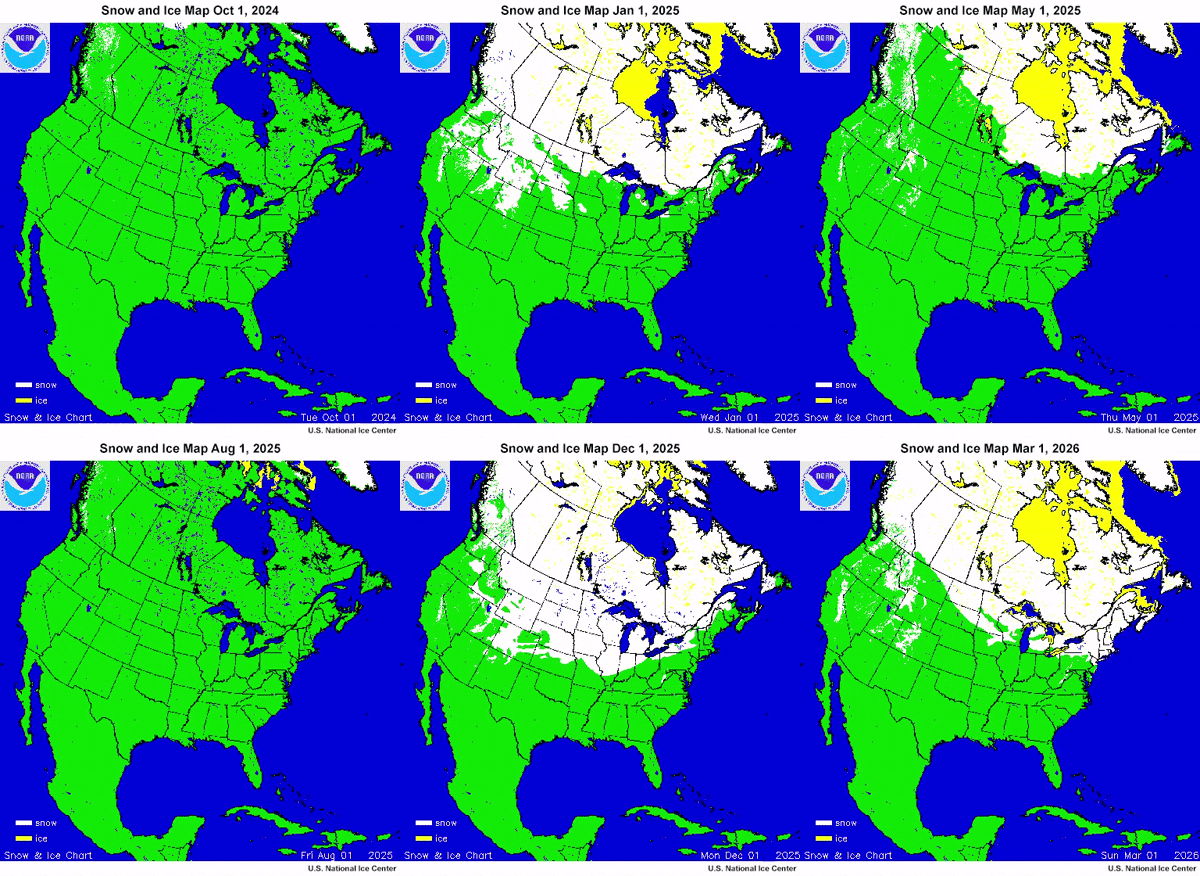
Monthly map views of snow and ice coverage from October 1, 2024 through March 1, 2026 showing the buildup of snowpack from late fall through winter and the decrease in overall snow accumulation during the spring. Snow cover for the 2025-2026 winter was very much below normal compared to previous years.
U.S. National Ice Center
Changes in the amount, type, or timing of precipitation in a water year directly affect water storage and water levels in rivers and streams. During the winter in mountainous areas with below-freezing temperatures, precipitation falls in the form of snow. The snow that accumulates on the ground and persists until the arrival of warmer weather is referred to as snowpack. Every year and place can be different, but in general, scientists are observing three main changes when looking at snowpack numbers back to the 1950s. At present, they find there is less snow, the date when snow is deepest is earlier in the season, and the snow melts earlier.
Rain instead of snow and faster snowmelt = not enough water
With warmer winter air temperatures, more precipitation falls as rain instead of snow. This change in precipitation type has many impacts, particularly in mountainous areas where winter snowpack is important for water supplies at lower elevations. Think about snow as a way of storing water: snow keeps that water in frozen form until springtime when it melts and feeds into rivers and streams. In contrast, precipitation falling as rain runs off immediately, swelling rivers and streams and potentially leading to winter flooding. This faster runoff also means that less water is available for use during the summer.
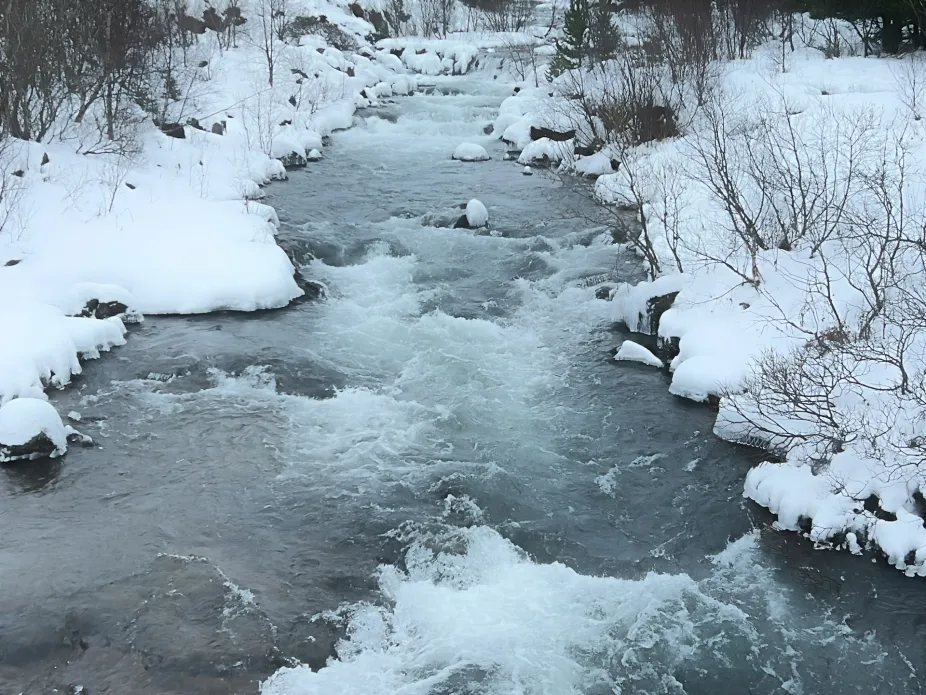
Higher temperatures and rain on snow during the winter can accelerate snowmelt and runoff into rivers and streams, shifting the timing of peak water levels and reducing overall summertime water availability.
Unsplash by Freysteinn G. Jonnson
How does changing snow impact the biosphere?
When there is less water flowing in streams and rivers or stored in lakes or reservoirs, the water temperature rises. Shallower water means the Sun's energy penetrates further below the surface layer, causing warmer summertime water temperatures.
These higher water temperatures threaten fish and other aquatic species in Earth’s biosphere. Salmon in the rivers of the Pacific Northwest, for example, are experiencing disruptions to their migration, which also affects the humans who depend on them for food. In arid areas, lower water levels and hot summers can dry up entire portions of rivers and streams. This means less water for fish and other wildlife. When water levels fall too much, fish can become stranded as small, unconnected pools form in the shrinking riverbeds. In the Rio Grande river basin in the southwest U.S., ongoing changes in snowmelt and seasonal stream changes have altered river systems enough that the silvery minnow is now present in just 7% of its former habitat.
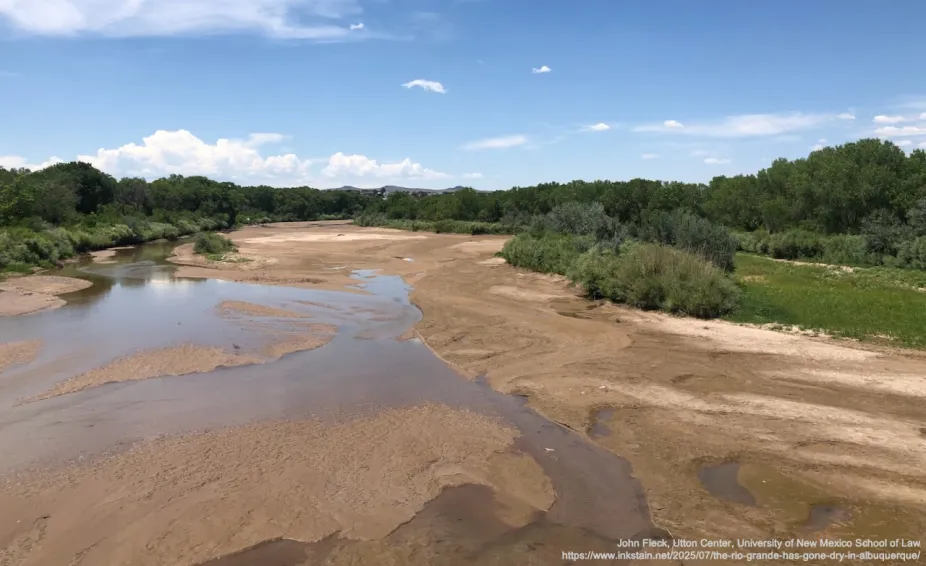
Segments of the Rio Grande are drying up, reducing the available habitat for many aquatic species (2025).
John Fleck, Utton Center, University of New Mexico School of Law
Understanding how changes in the atmosphere affect changes in snow sets the stage for being able to trace connections to the hydrosphere and biosphere, including effects on humans and other animals. Changes that might seem subtle, such as shifts in the timing of peak snow and subsequent melting, can have wide-reaching effects across different parts of the Earth system.