Is It the Heat, Humidity, or Both?
Key Takeaways
High humidity acts in conjunction with high temperatures to make heat even more extreme and dangerous.
The combined effects of humidity and temperature can be estimated by two different heat safety indices: the heat index and the wet bulb globe temperature (WBGT).
Heat exposure can cause several impacts to the human body, including organ strain, heat exhaustion, and heat stroke.
When Heat Becomes Dangerous
On July 11, 2026, the England and Norway soccer teams met to play a quarterfinal World Cup match in Miami, Florida. Temperatures at game time were 33°C (91°F). The heat index, which accounts for the added effects of humidity, was 45°C (113°F), considered a dangerous level far exceeding safety thresholds.
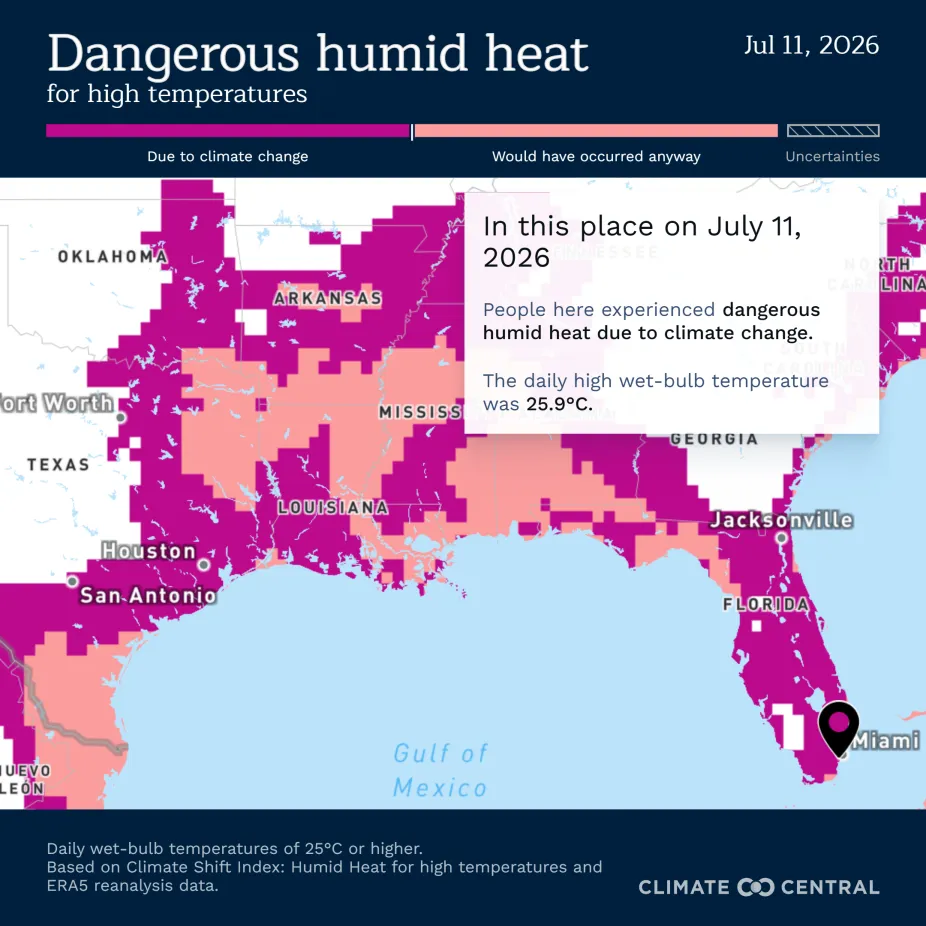
Dangerous “humid heat” conditions affected multiple World Cup soccer matches in 2026, including a quarterfinal game held in Miami, Florida, on July 11.
Climate Central
To ensure player safety, officials added three-minute hydration breaks midway through each half of the game. In total, an estimated 20 (nearly one-fifth) of the 104 World Cup matches took place in extreme heat, in many cases made worse due to high humidity. Another 23 matches took place in extreme conditions, but in indoor stadiums. In these locations, fans attending matches or participating in outdoor watch parties were still exposed to hazardous heat.

World Cup soccer matches draw tens of thousands of fans to large stadiums. Extreme heat conditions can be a notable concern, particularly for outdoor venues.
unsplash Igor Batista
The U.S. was not alone in experiencing these impacts. Extreme heat affected many locations across the northern midlatitudes in the spring and summer of 2026. Western Europe, for example, experienced its hottest June on record, with temperatures up to 9°C (16°F) above normal in many areas, with many of those temperatures accompanied by higher humidities. By the end of June, more than 14,000 deaths were attributed to the heat, and temperatures climbed even higher in July. These higher temperatures are part of a larger pattern: Europe is warming at a rate of +0.56°C (1.01°F) per decade, more than double the global average rate. The warming has wide-ranging impacts. For example, athletes in the Tour de France endured 40°C (104°F) temperatures in early July, with extreme heat lasting several days during the event. Teams scrambled to keep athletes safe by setting up ice baths and allowing bikers to carry additional water. Although no parts of the Tour were cancelled, Stage 9 was shortened by 39 km (18 miles) due to the dangerously hot conditions.
What is the Role of Humidity in Extreme Heat?
Not all heat is the same. When there’s more water vapor in the atmosphere — meaning more humidity — the risks related to heat go up. Higher humidity interferes with our ability to sweat, which is our body’s main way of cooling down. The dangers of extreme heat become worse and can lead to a range of serious and even fatal heat-related illnesses. Heat doesn’t just affect professional athletes. Outdoor workers, people with health conditions or disabilities, student athletes, children, and anyone who plays or exercises outdoors are also at risk.
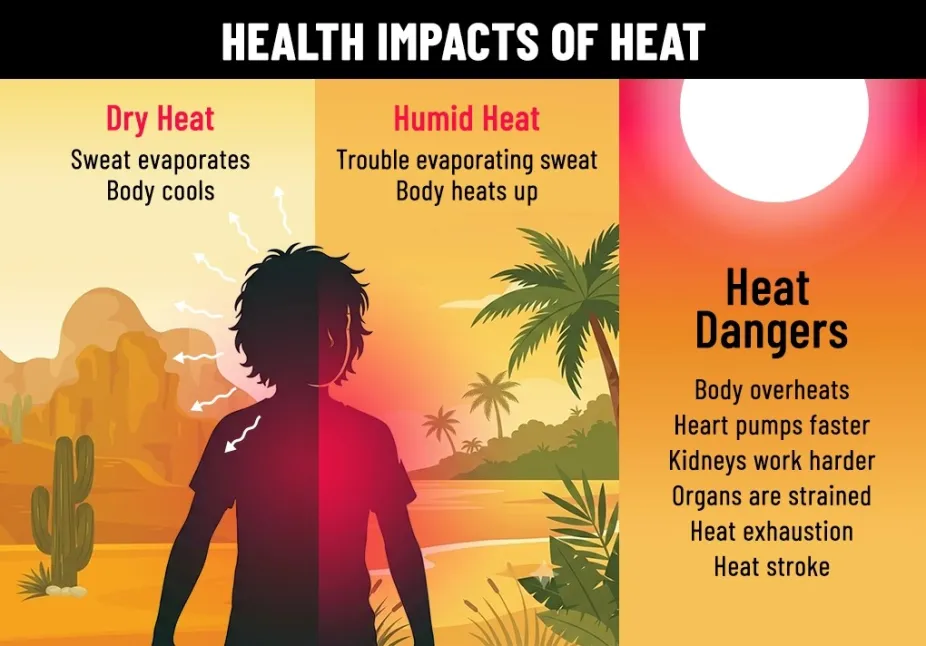
Humidity adds to the risks from extreme heat by making it more difficult for sweat to cool your body, increasing your internal temperature and straining your organs. Heat exhaustion or more serious heat stroke are possible impacts.
UCAR
How is the Heat-Humidity Combination Measured?
How do we measure humidity to know if “humid heat” is a risk? Dew point temperature (the temperature at which air will become saturated based on the amount of water vapor present) provides information about humidity in the atmosphere. Higher dew point temperatures mean there is more humidity in the air. In the summertime, for example, dew points above 18°C (65°F) typically mean a lot of water vapor is present in the air and can lead to outdoor conditions that feel uncomfortable or muggy.
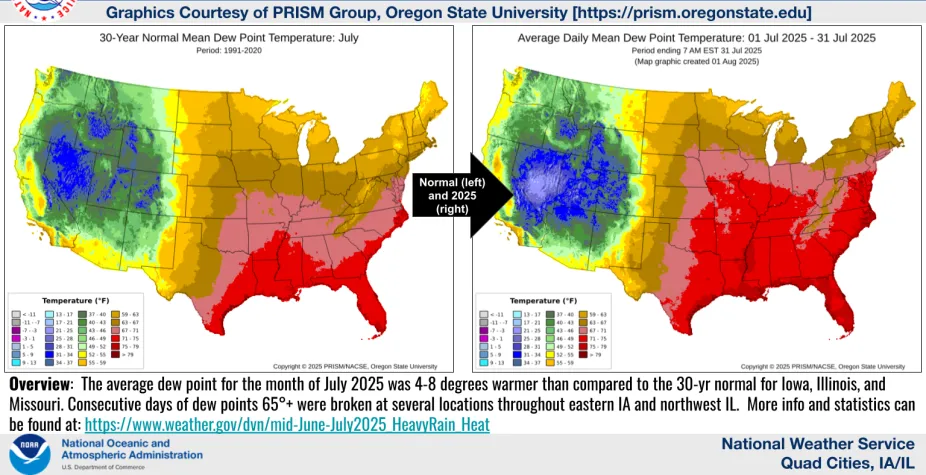
Looking at average dew point temperatures over time (left) and for individual recent years (right) can provide information about the regions at highest risk for humid heat, as well as how the geographic extent of humid heat risk is increasing.
NOAA NWS and Oregon State University/PRISM
To find out about the humid heat risk for a given day at your location, you can check one of two different heat safety indices.
- The wet bulb globe temperature (WBGT) estimates heat exposure in direct sunlight. It combines values for temperature, humidity, wind speed, sun angle, and cloud cover and is used by military agencies, workplace safety officials, and many nations around the world to assess potential heat risk in sunny conditions. Because it takes all of these factors into account, WBGT provides a very accurate measure of the overall humid heat risk.
- The heat index is a computation of humid heat in shady conditions, or outside of direct sunlight. It combines air temperature and humidity data to estimate what the environmental temperature (including humidity effects) “feels like” on your skin. The heat index is calculated whenever the air temperature tops 27°C (80°F) and will exceed the air temperature when humidity is 50% or higher. Heat index values of 39°C (103°F) and above represent dangerous conditions for people participating in outdoor activities. Above this value, sweat on your body does not evaporate as well, making it increasingly difficult for the body to cool down.
| Parameter Used | Heat Index | Wet Bulb Globe Temperature |
|---|---|---|
| Temperature | Yes | Yes |
| Humidity | Yes | Yes |
| Wind | No | Yes |
| Cloud cover | No | Yes |
| Sun angle | No | Yes |
| Estimated for shady conditions | Yes | No |
| Estimated for sunny conditions | No | Yes |
| Threshold for potentially hazardous heat exposure | Caution at 27°C / 80°F and above Dangerous beginning at 39°C / 103°F |
28°C / 82°F |
Are Hot and Humid Days Becoming Worse?
If you feel like it’s getting hotter and more humid where you are, the evidence supports your hypothesis. Temperatures worldwide are rising, and in some locations, humidity is also increasing. Observations from many locations around the world provide evidence that more people are now exposed to more intense, and more frequent, episodes of humid heat.
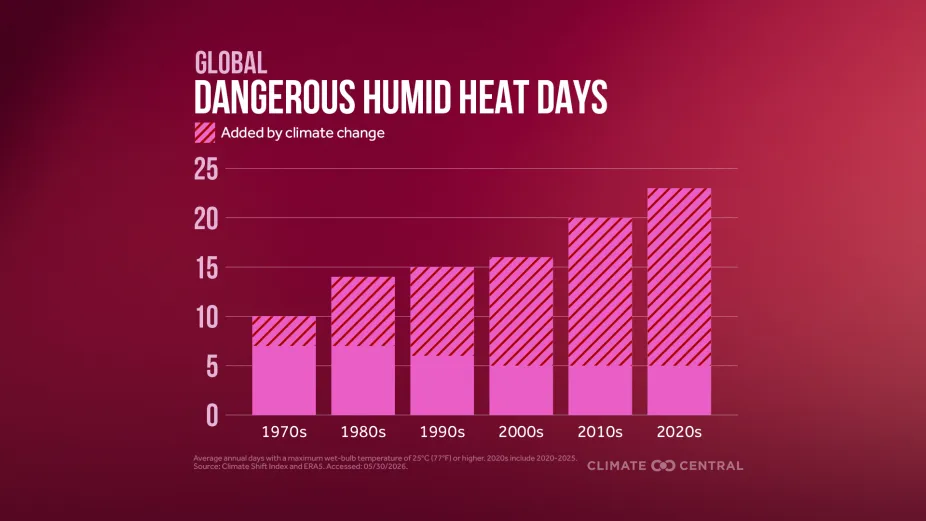
Globally, the average number of dangerous humid heat days has more than doubled — from 10 days per year in the 1970s to 23 days per year in the decade from 2016 to 2025.
Climate Central
Extreme heat events, including the ones affecting parts of the U.S., Europe, and other countries in the summer of 2026, are made more likely by climate change and are expected to become more frequent through the rest of this century. Various tools, including NSF NCAR’s Extreme Heat Climate Inspector, can help you visualize expected future changes in humid heat.
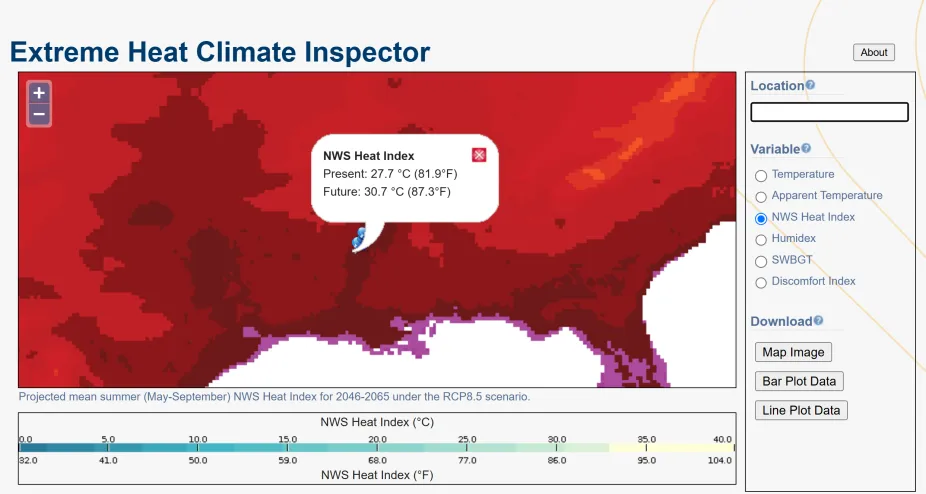
Rising temperatures and increases in humidity will bring more episodes of high heat index values, corresponding to more frequent future humid heat events.
NSF NCAR
Staying Safe During Extreme Heat and Humidity
You can keep yourself and your friends and family safe during hot, humid weather days by being aware of dangerous heat conditions, making sure you have enough water to stay hydrated, and taking breaks when participating in outdoor activities.
Overheating needs to be taken seriously. If you feel faint, sweat so excessively that your skin becomes cool or clammy, or have a weak pulse or cramps, you might be experiencing heat exhaustion and should immediately move to a cool place, rest, and drink cool fluids to try to prevent the onset of more serious heat stroke.
Heat stroke indicators include:
- hot, dry skin or a high body temperature
- blurred vision
- confusion
- slurred speech
- dizziness
- fast heart rate
Heat stroke can be fatal and requires emergency medical intervention: Call emergency services immediately and while waiting for them to arrive, move the person to a cooler environment, loosen or remove excess clothing, apply cool water or ice packs and fan the skin to help lower body temperature, and, if the person is conscious, try to get them to drink chilled water or a sports beverage containing electrolytes.